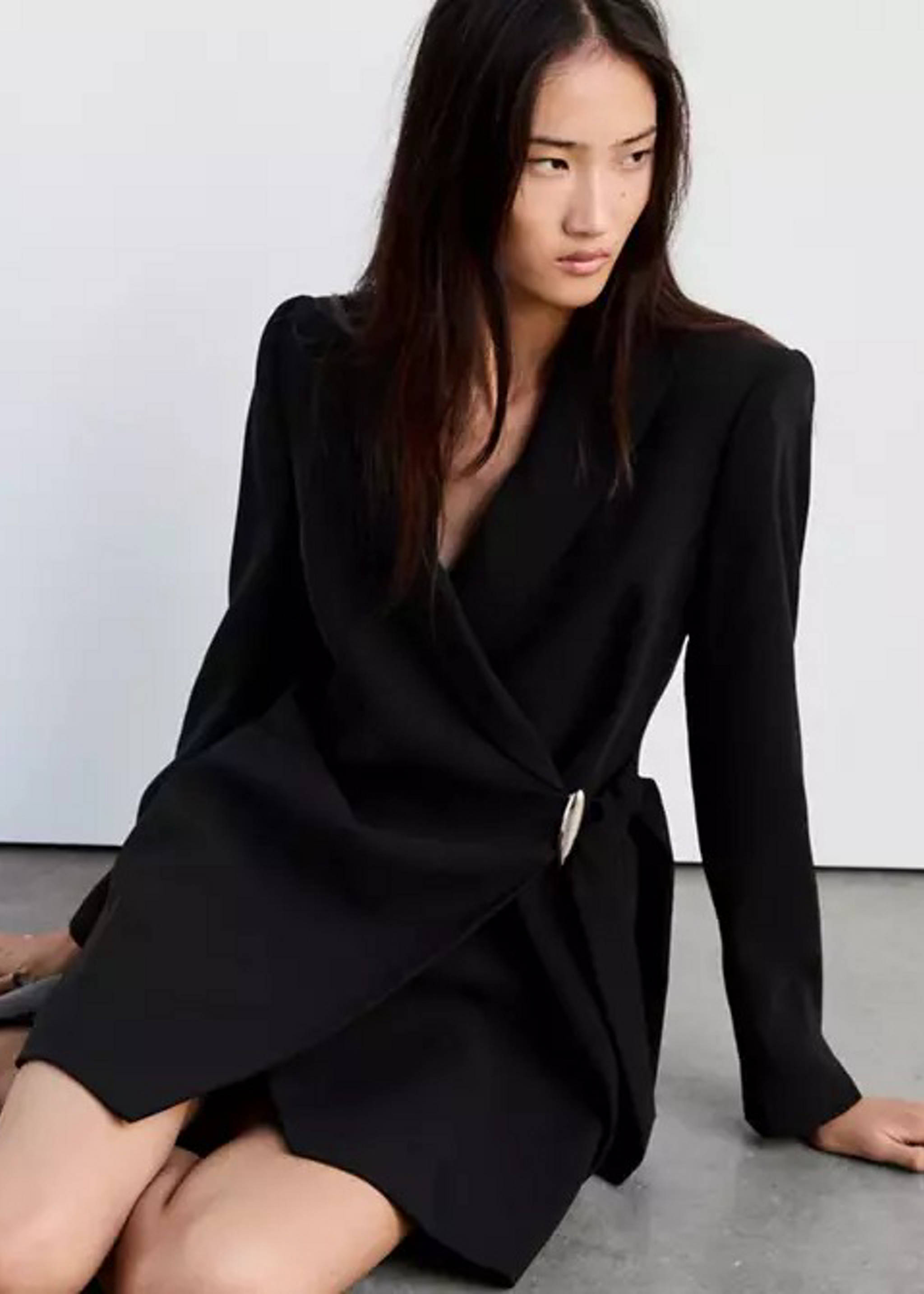
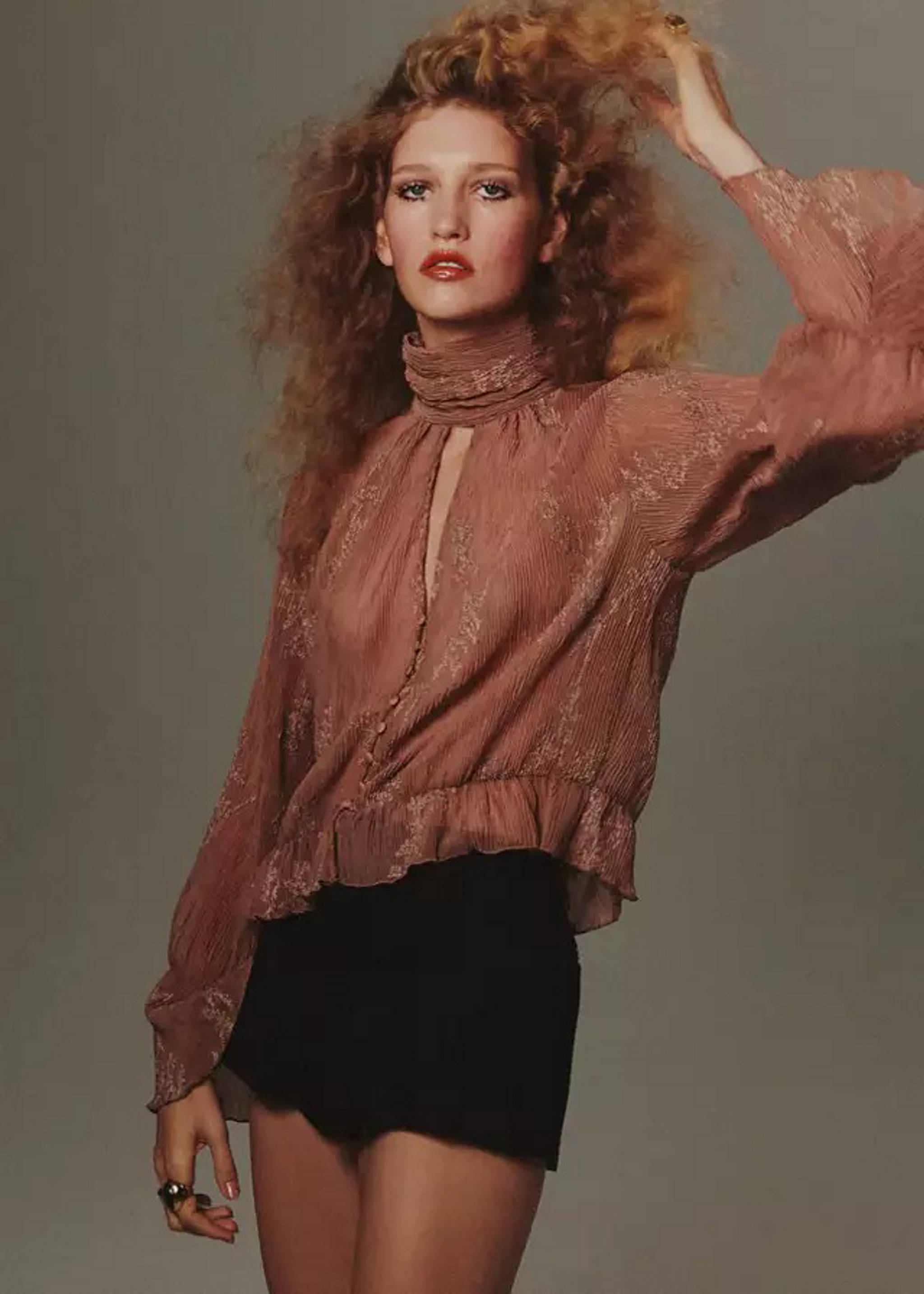
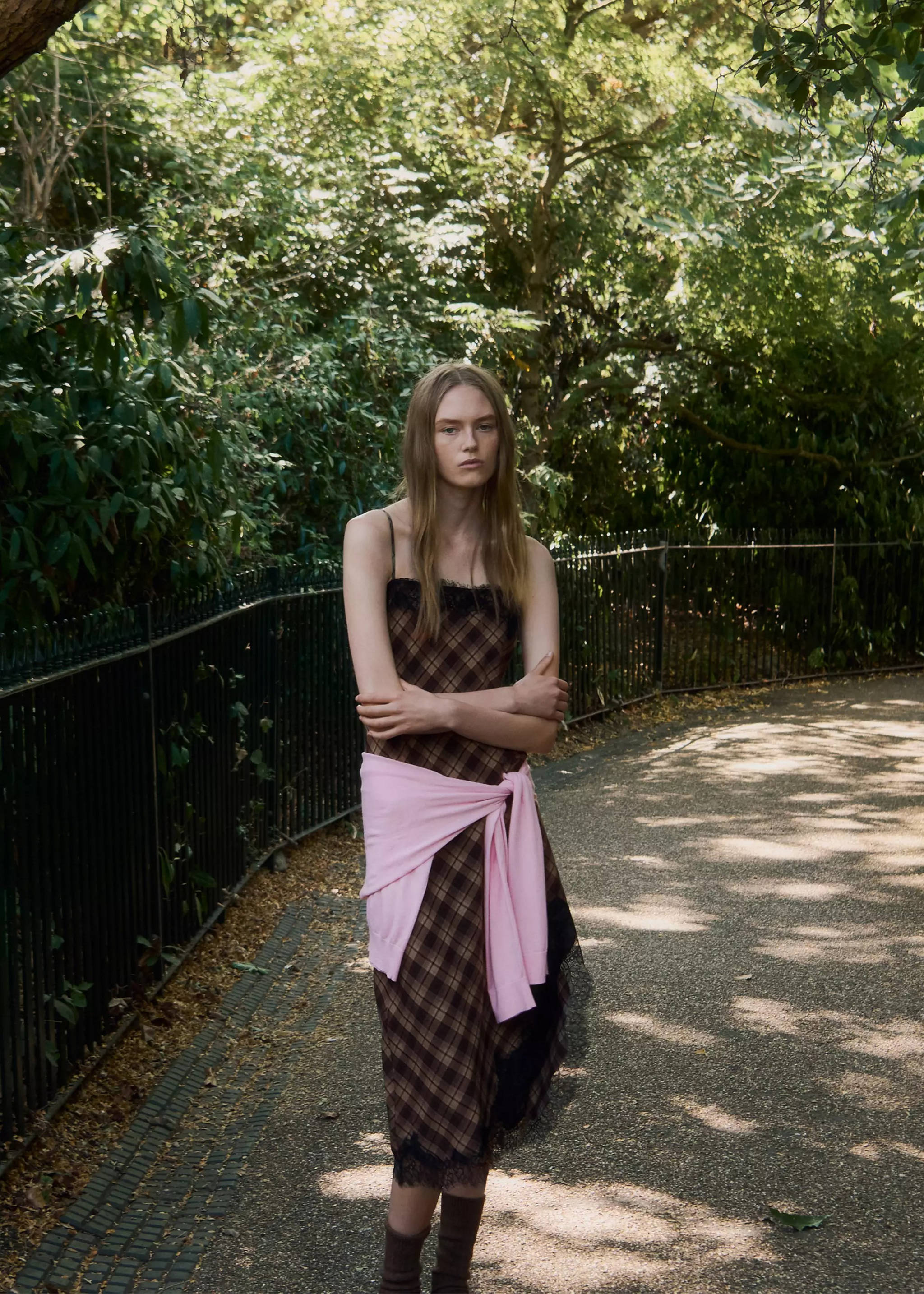
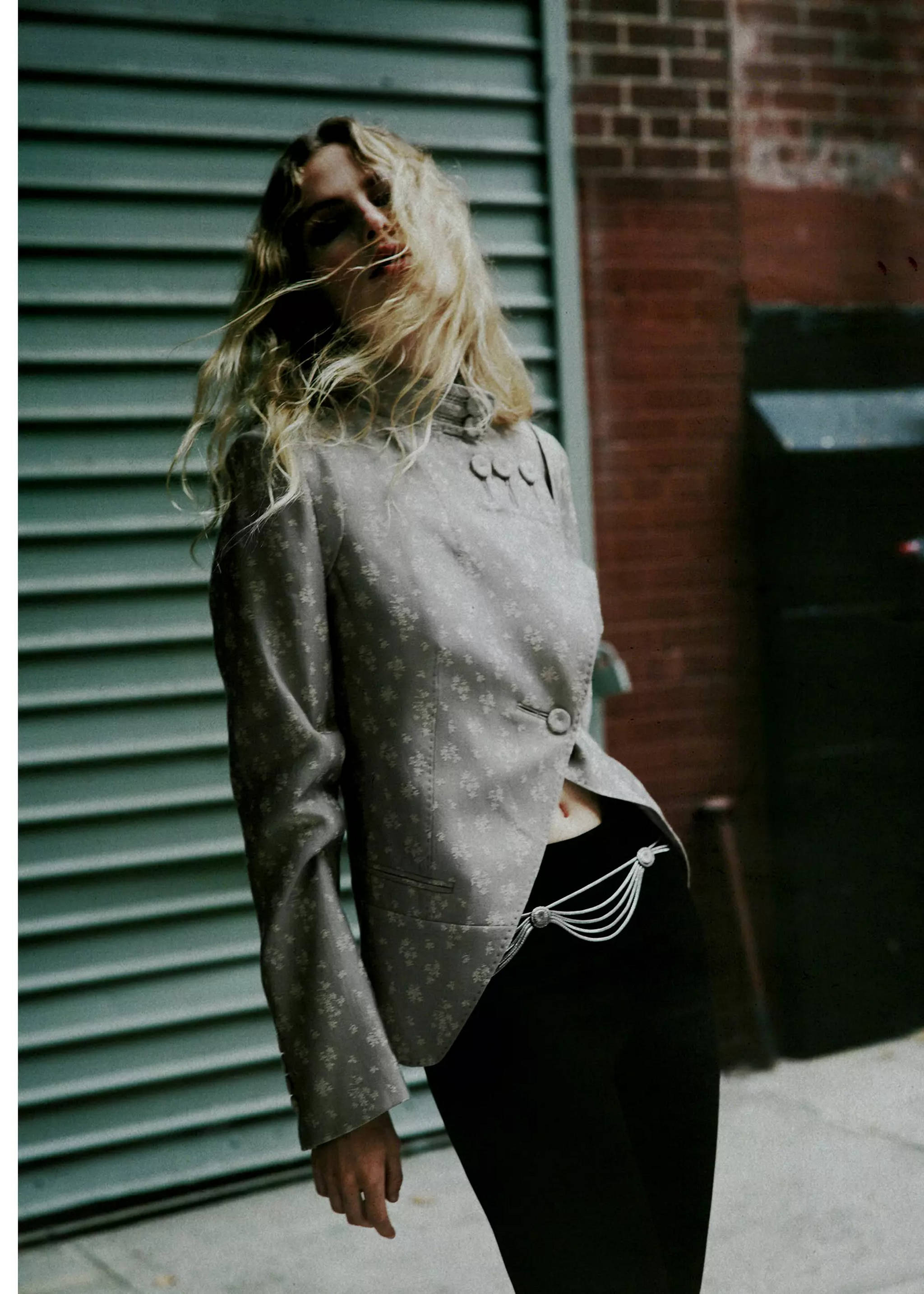
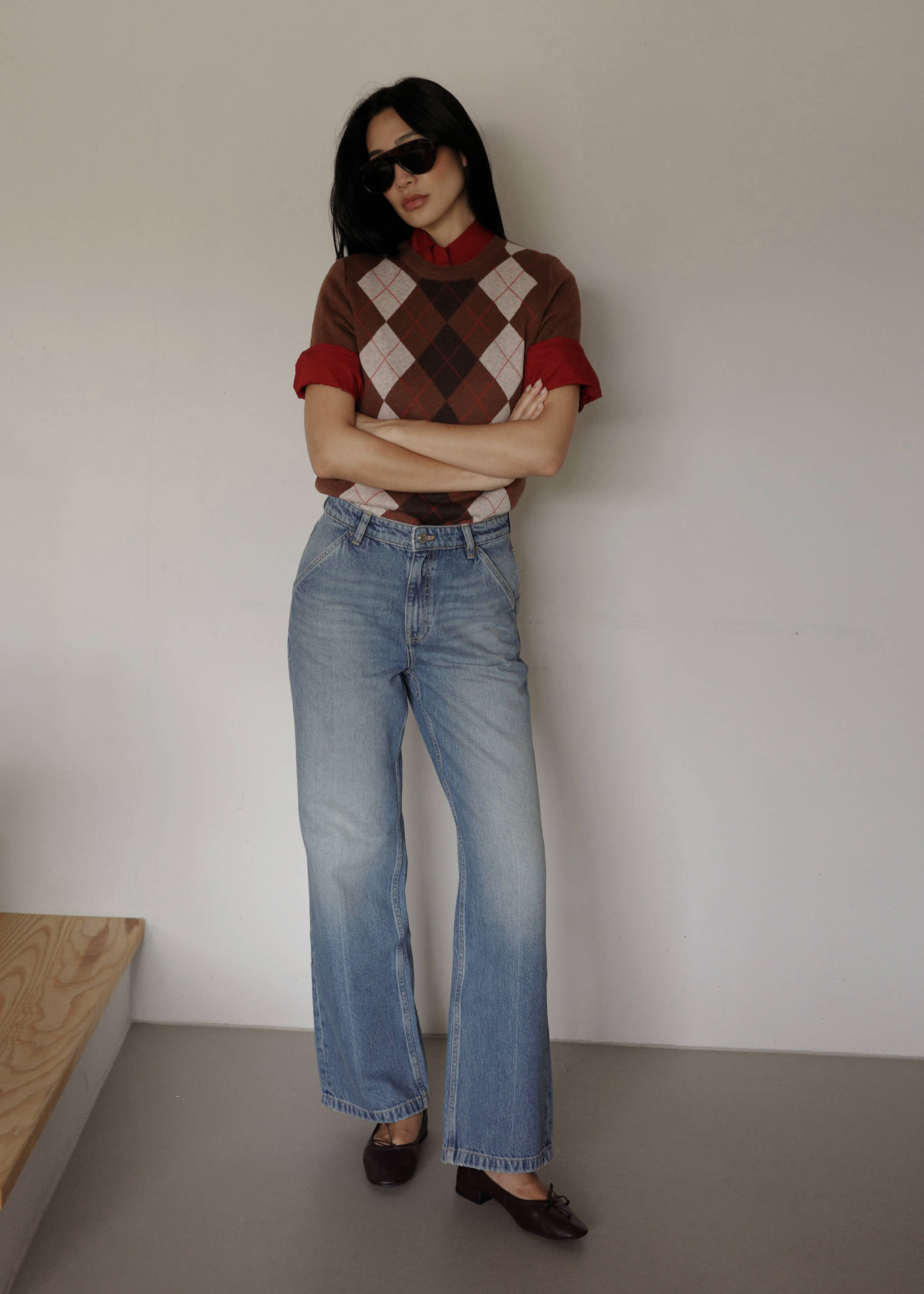
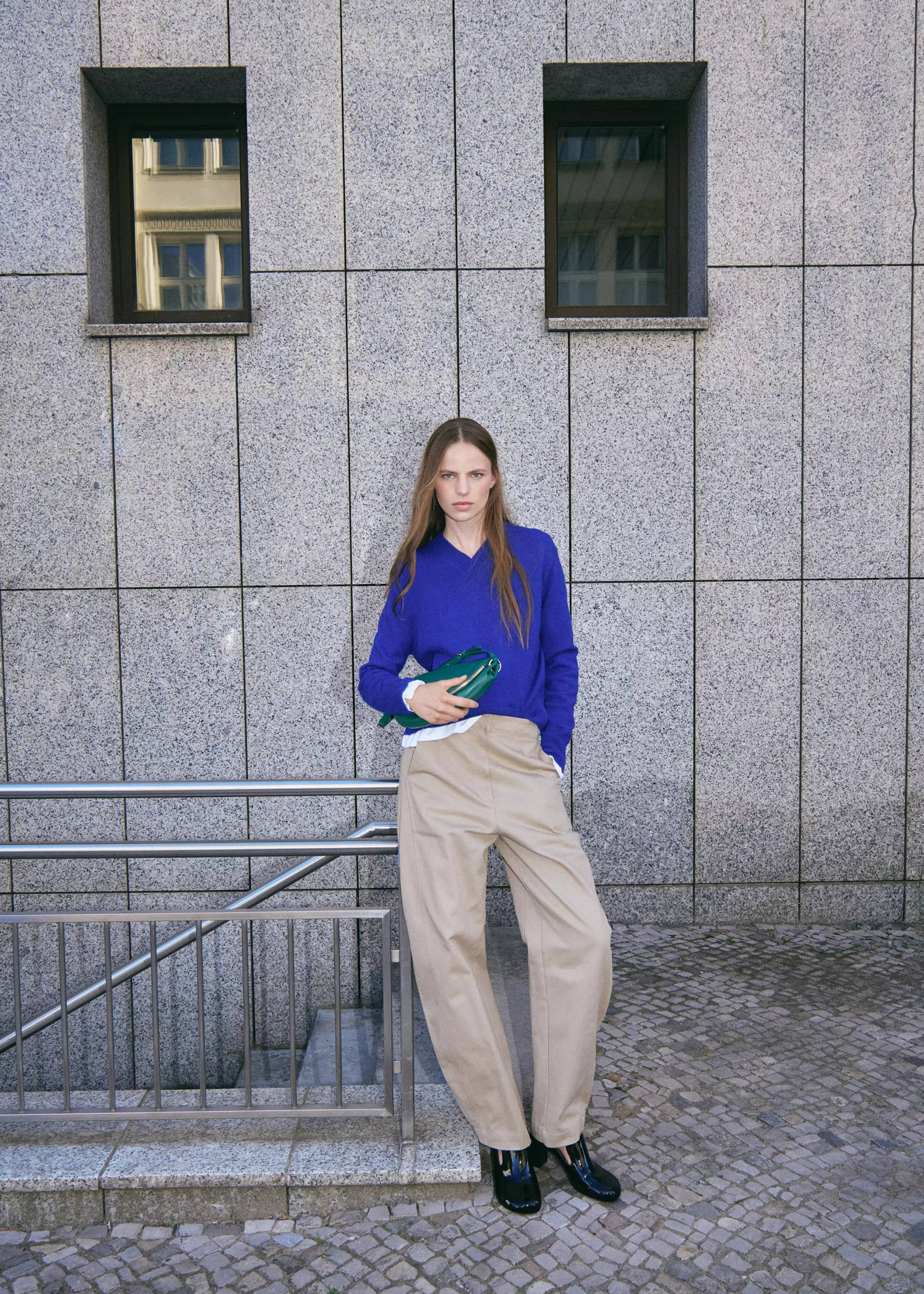
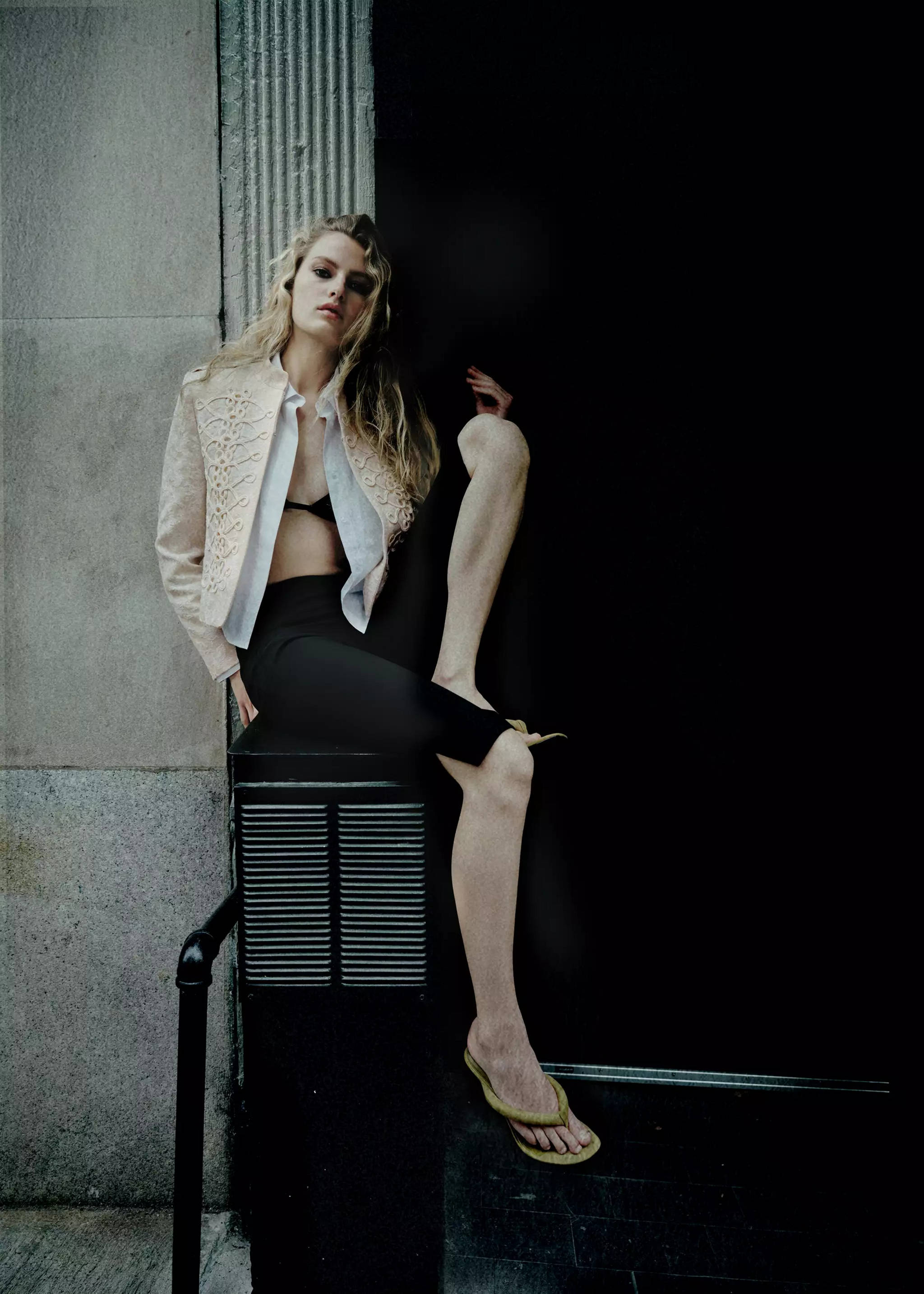
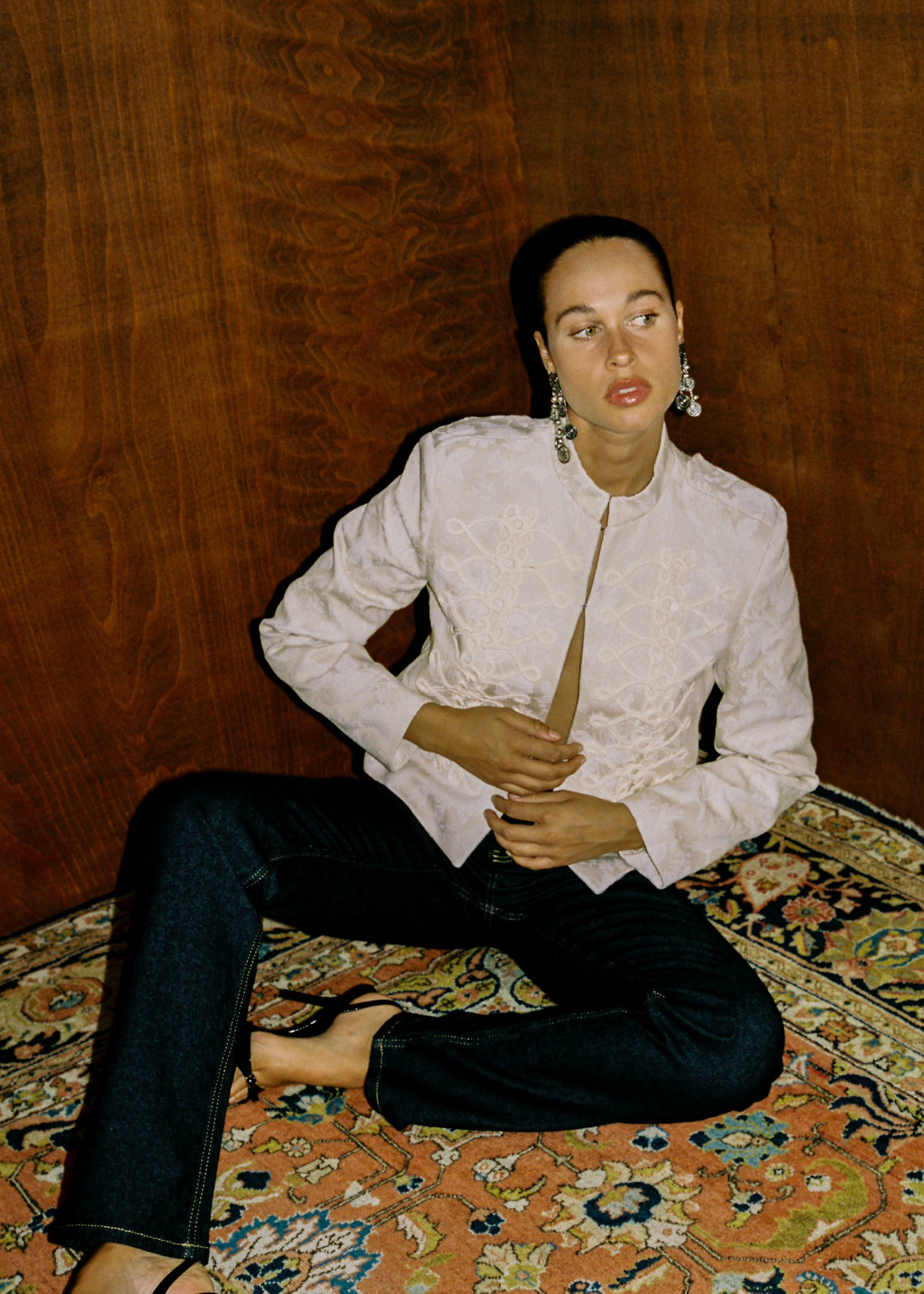
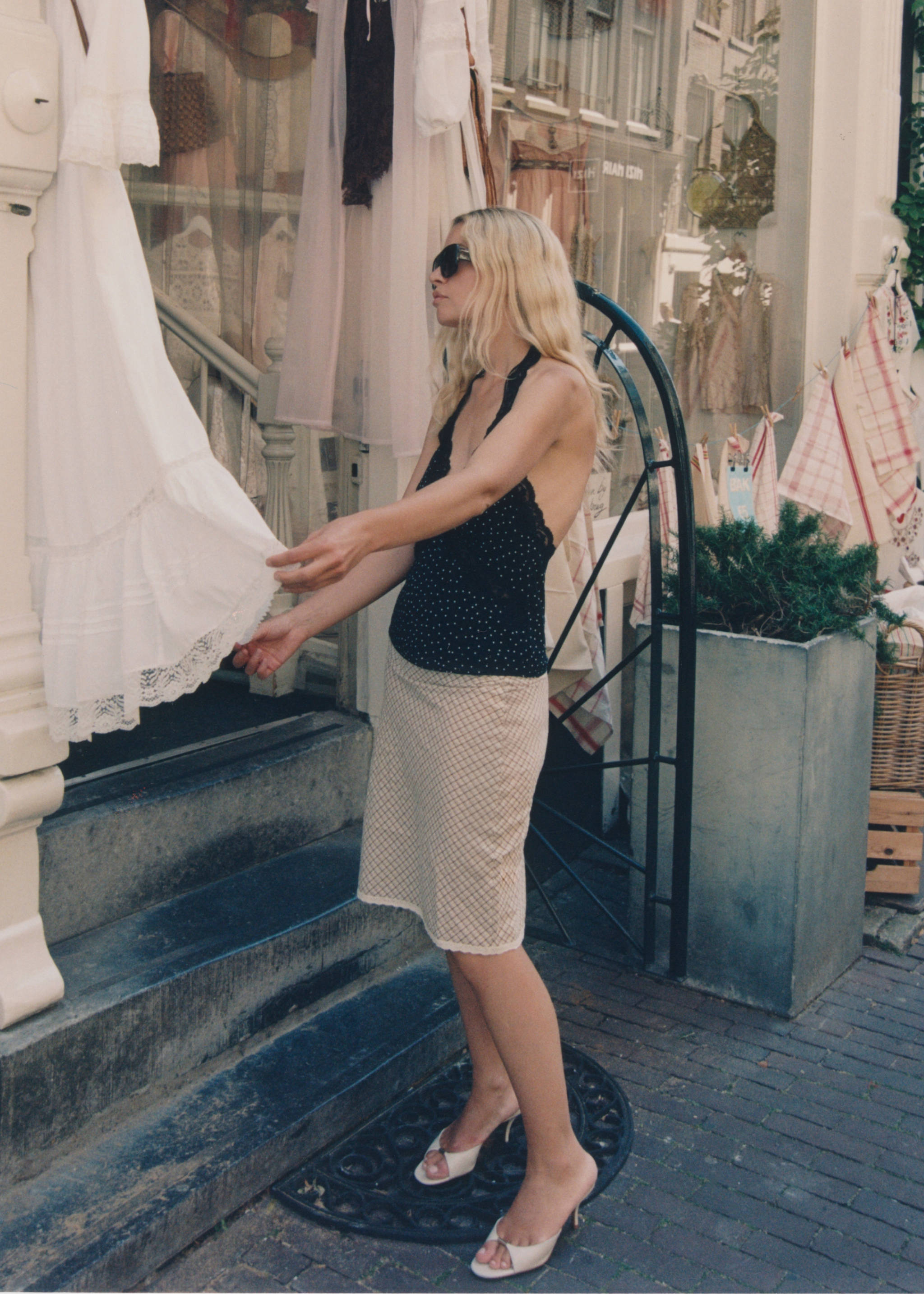
Jacquard is a fabric in which the pattern is not printed: it is woven, thread by thread, on the loom itself. That, in essence, is what jacquard is: flowers, damasks and geometric patterns that emerge from within the fabric and are revealed in relief when the light falls on them. For centuries it has adorned ballrooms, upholstery and formal wear. Today it returns in a lighter, satin finish and tone-on-tone shades, moving with the body rather than imposing itself. Yes, you read that right: the fabric of palaces is now the fabric of your winter evenings. And this season you’ll see it everywhere.
What is jacquard and why are you going to see it everywhere?
Looking for inspiration? Discover the textured fabric that adds a subtle sheen to your winter outfits.
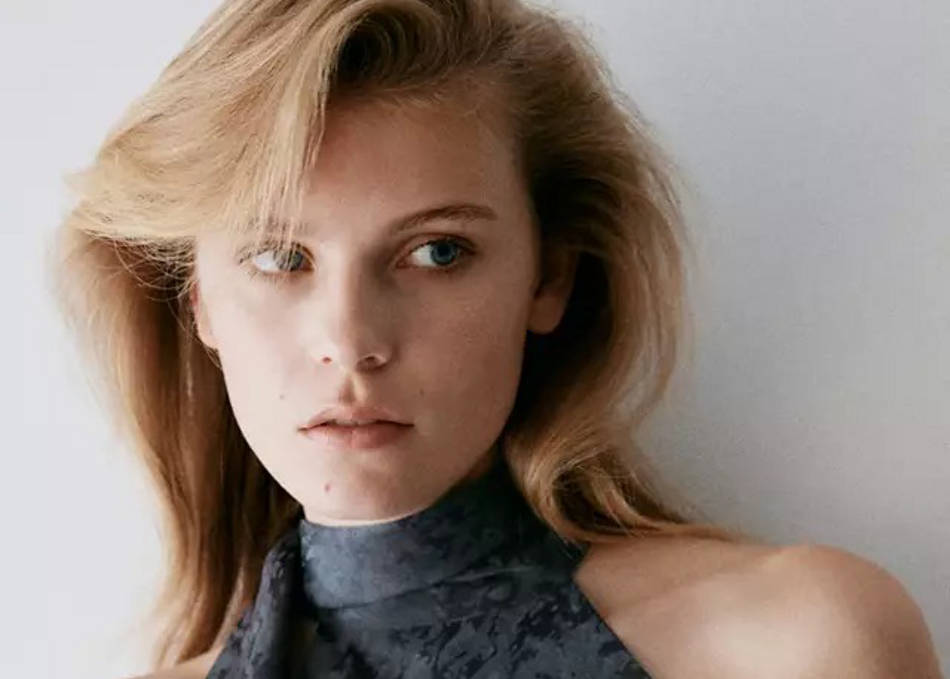
What is jacquard fabric?
Jacquard is a fabric whose pattern is created on the loom by individually raising the warp threads. The motif is integrated into the very structure of the fabric, with relief and texture, and therefore does not fade or wear away like a print.
That is where its magic lies. A print sits on top of the fabric; jacquard inhabits it. That is why it is not a fibre, but a technique: it can be woven from silk, cotton, wool, viscose or polyester, and in each it tells a different story.
Recognising it is almost a ritual. Run your fingers over the surface and you’ll feel the relief, sometimes barely perceptible. Turn it over: the reverse side bears the same pattern in negative, like a photograph developed the wrong way round. Then, move under the light. In tone-on-tone jacquard, the motif appears and disappears amongst shiny and matt areas, as if the garment were breathing with you.
The origins of jacquard: from the loom to the catwalk
Its history began in Lyon, the European capital of silk, in the early 19th century. There, in 1801, the weaver Joseph Marie Jacquard introduced a mechanism that controlled each warp thread using punched cards. Until then, weaving damask required an assistant to lift the threads by hand, pass by pass, during endless working days. With Jacquard’s loom, the pattern was recorded on cardboard and could be repeated with unprecedented precision.
The invention made brocades and damasks—previously seen only in palaces and grand salons—accessible to a much wider audience. Moreover, it left an unexpected legacy: those punched cards inspired the first calculating machines, which is why the loom is considered a distant ancestor of computing.
From tapestries, it made the leap to ceremonial robes, then to haute couture and, finally, to the catwalk. Today, looms are electronic, but the essence remains the same: transforming fabric into a canvas.
Types of jacquard
To talk about types of jacquard is to talk about a family with many distinct characteristics. Brocade is the most baroque: it incorporates extra threads, often metallic, which create raised patterns with an almost embroidered look. Damask is its understated counterpart, tone-on-tone and reversible, with a pattern that emerges solely from the interplay between sheen and matt. It is the fabric that inspires this season’s satin pieces.
Matelassé is all about volume: it is a double-layered fabric with a quilted effect, lending body and structure to jackets and skirts. Jacquard knitwear brings the technique to knitwear, filling jumpers, cardigans and dresses with multicoloured patterns, featuring that reverse weave where threads shift from one shade to another. And metallic or lurex jacquard is the most evening-appropriate version: threads of light woven into the pattern, designed to sparkle when night falls.
Jacquard vs. print: how they differ
At first glance, they may seem similar, but they are almost opposites. With printed fabric, the design is printed onto the surface; with jacquard, it is woven into the fabric. You can feel the difference before you see it: jacquard has a raised texture, whilst printed fabric feels smooth to the touch.
Jacquard also tends to have more body and a more substantial drape. Printed fabric depends on the base fabric and tends to be lighter. And time treats them differently: the woven pattern withstands wash after wash, whilst the printed design may gradually lose its vibrancy.
The ultimate trick? Turn the garment inside out. If the design is still there, in negative, it’s jacquard. If the reverse side looks pale or plain, it’s a printed fabric.
Jacquard in the autumn-winter 2026–2027 trends
This autumn-winter, texture makes just as much of a statement as colour. Your wardrobe is crying out for pieces that reveal themselves up close, and tone-on-tone jacquard delivers a subtle sheen that enriches understated colour palettes: black, charcoal grey, chocolate brown. The novelty lies in the way it moves. Far from the stiffness of classic jacquard, it features bias-cut silhouettes, draping that caresses the neck and fringes that sway with every step. If you want the full picture, take a look at our autumn-winter 2026–2027 trends. If you’d rather get straight to the practical side, these four looks will show you how to wear it.
A jacquard top for winter dinners
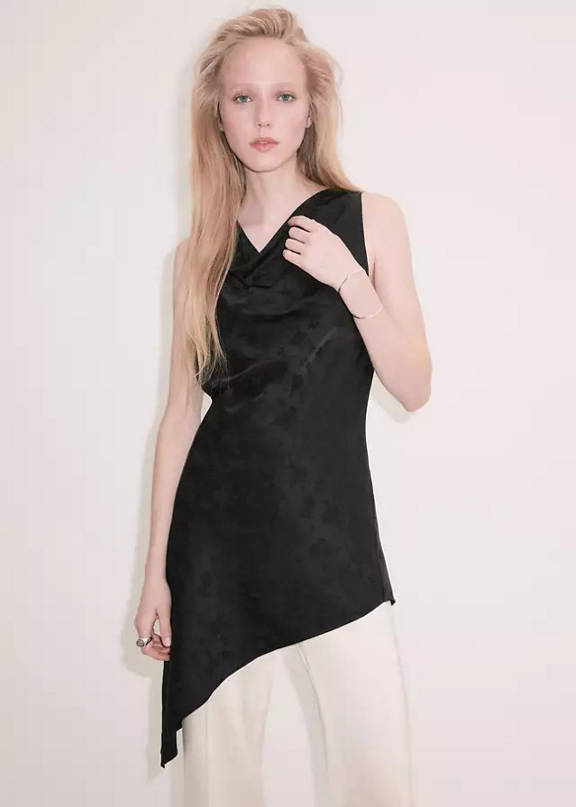
There are dinners that call for something more than just the basics, but not quite as much as a dress. For these occasions, the star of the show is a long, sleeveless top in black satin, featuring a tone-on-tone floral jacquard pattern that only becomes visible when the light catches it, like a well-kept secret. The draped neckline, in a soft halter style, delicately frames the shoulders and collarbones, whilst the asymmetrical V-shaped hem creates a line that elongates the silhouette. Pair it with straight-leg trousers in ecru: the contrast between the deep black and the off-white brightens the outfit and balances the sheen. Finish off with thin-strapped sandals, a small clutch and your hair tied back so that the neckline takes centre stage. Formal, yet relaxed. Elegant, yet seemingly effortless.
Jacquard mini dress for parties
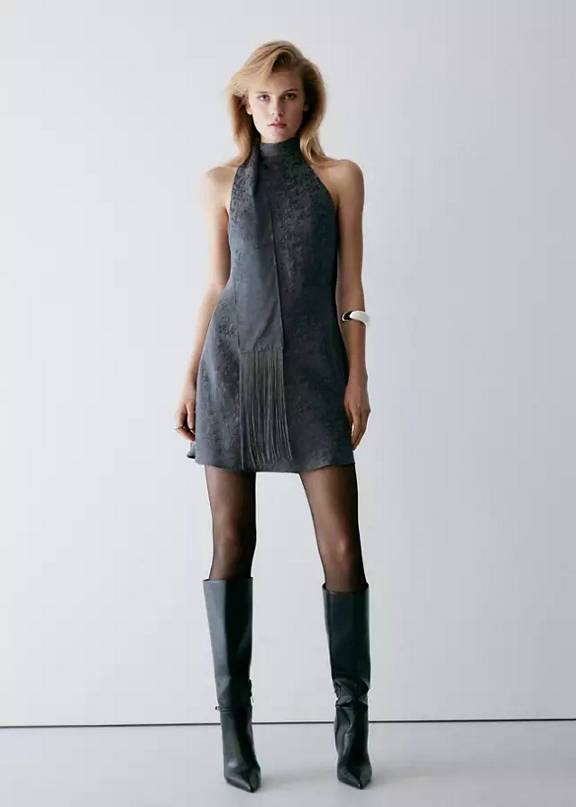
When the plan is to dance, your dress has to dance with you. This [grey party dress] in charcoal gets it spot on: its tone-on-tone jacquard, with a satin-like finish, captures every glint on the dance floor and reflects it back, multiplied. The high halter neckline leaves your arms and shoulders bare. At the front, a scarf-like strip cascades down, unfurling into long fringes that move to your rhythm: it’s the detail that transforms a mini-dress into a special-occasion piece. The short, sleeveless, flared cut looks marvellous with opaque black tights and stiletto ankle boots, or with court shoes if it’s a gala evening. Add some silver earrings and let the fabric do the talking. The look that says it all without saying a word.
Jacquard skirt for the office and beyond
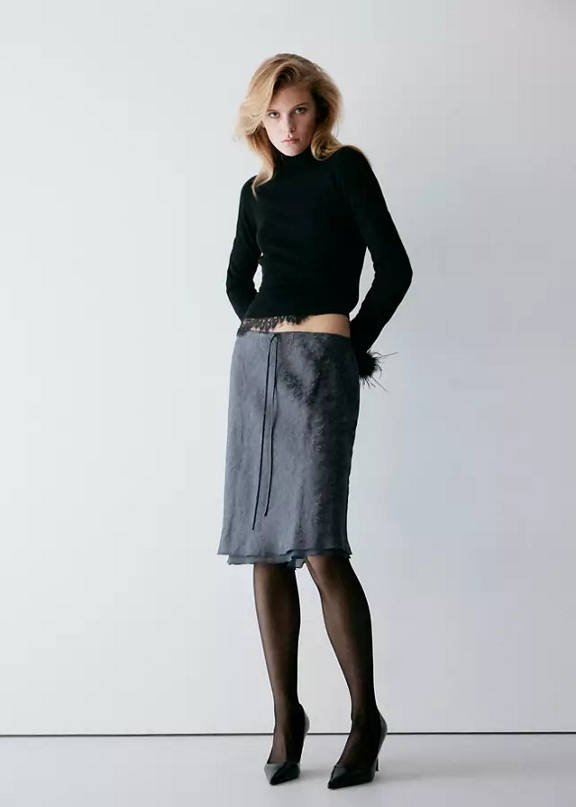
Charcoal grey, cut on the bias and with a barely perceptible sheen: this grey skirt is proof that jacquard has a place in your wardrobe too. The bias cut ensures the fabric drapes close to the body without clinging, with that fluidity unique to well-cut garments. A thin black drawstring, tied at the waist and left loose at the front, breaks up the colour palette with a subtle touch, whilst the double hem with a wavy finish adds movement with every step. In the morning, wear it with a fine-knit jumper and loafers for a purposeful office look. As the afternoon draws in, swap the jumper for a black bodysuit, add heels and some gold hoop earrings. One garment, two outfits and no need to change your wardrobe.
Jacquard dress for a winter wedding guest
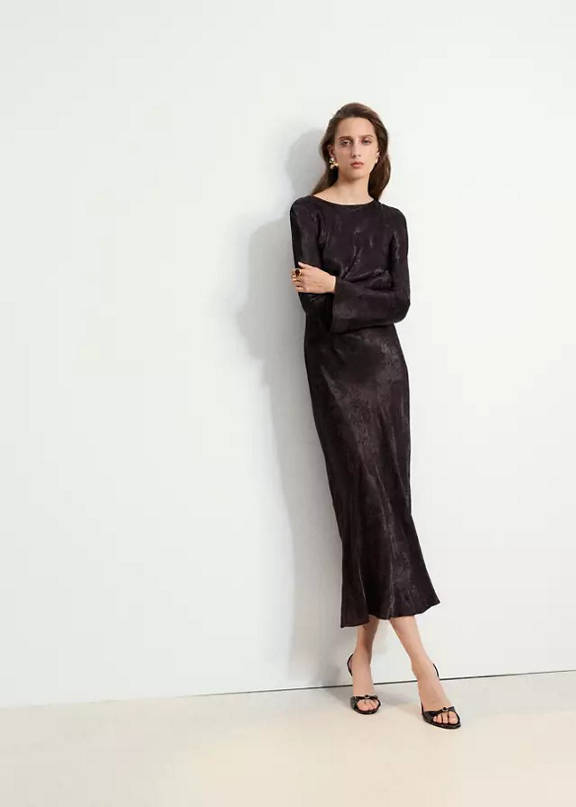
Winter weddings, December christenings, company dinners at a long table… Some celebrations call for understated elegance with character, and this midi-maxi dress in very dark brown, almost black, has just that. It’s made from the same tone-on-tone satin jacquard as the other pieces, and reveals its pattern with every movement, like a tapestry in the half-light. The round neckline and long, slightly flared sleeves lend it an elegant and timeless air, whilst the bias-cut design does the rest with a fluid drape falling to mid-calf. It’s one of those wedding guest dresses that doesn’t need much: a long camel-coloured coat, leather court shoes and gold jewellery to bring out the chocolate hue. If you’re looking for a winter guest outfit that will see you through more than just one season, start here.
How to look after jacquard garments
A jacquard garment is a small work of art created on a loom and deserves care to match. Always start by checking the care label. Silk, viscose and metallic fabrics are best hand-washed in cold water or taken to the dry cleaner’s; cotton and polyester can be machine-washed on a delicate cycle at 30 °C. Wash it inside out and in a laundry bag to protect its texture, and avoid the tumble dryer: lay it flat to dry or hang it on a hanger, away from direct heat.
When ironing, do so inside out, at a low temperature and with a thin cloth between the iron and the fabric. This ensures the pattern retains its texture and the satin finish doesn’t develop unwanted shine.
Loose threads are its most delicate feature. Take care with zips, Velcro, rings and bags with metal fittings. If a thread comes loose, don’t pull on it: tuck it back in through the reverse side using a needle.
And when storing it, use padded hangers for dresses and tops. Bias-cut skirts should be folded or hung by their ribbons, and knitted garments should always be folded. It’s best to use breathable fabric covers rather than plastic ones: jacquard, like all good things, needs to breathe.